Fri, 06 March, 2026
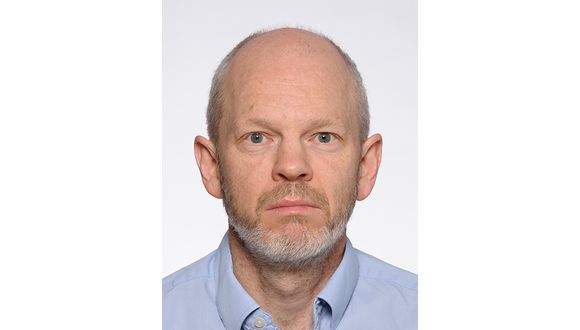
Dr Ewen Kellar, TWI’s Adhesive Technologies Consultant, was invited to present at the 4th International Conference on Industrial Applications of Adhesives 2026 (IAA 2026).
The event, which this year took place from 5-6 March in Pousada Mosteiro Guimarães, Portugal, is held biennially with a focus is on applications for adhesive bonding in industries including automotive, aeronautic, railway, marine, energy, and electronics.
The conference brings together adhesive producers and users to exchange experiences and facilitate potential synergies and partnerships.
Ewen’s presentation was based around a technical paper he co-authored with TWI Technology Fellow, Alan Taylor, called, ‘Wetting and Adhesion – Why Scale Matters.’
Wetting is a fundamental interfacial phenomenon that underpins the performance of adhesive joints, protective coatings, and functional surfaces, while its deliberate suppression—abhesion—is central to the design of release liners, self-cleaning materials, and anti-fouling technologies.
The paper examines why scale is critical to controlling these opposing outcomes, showing that wetting arises from interacting chemical and physical effects spanning multiple length scales, from nano to micro and, ultimately, macroscopic performance.
At the atomic to nanoscale, interactions between liquids and solids are primarily governed by the relative chemistries of the surface and adhesive or coating. These chemistries can be described using polar, dispersive, H-bonding contributions, although direct correlation between these values for constrained surfaces and labile liquids is challenging. It is widely recognised that chemical similarity promotes wetting and hence strongly influences the spreading of adhesives and coatings. It is also recognised that roughness and hierarchical structures can amplify the true contact area to promote adhesion, or stabilise composite wetting states that trap air and lead to abhesion, as with superhydrophobic surfaces.
Sessile drop methods provide the empirical data (static contact angles) that, using appropriate models, can be used to provide estimates of free energy values for solid surfaces. However, whilst the impact of topography is recognised as amplifying the inherent behaviour for a given liquid-solid system, the translation of this insight into reliable design rules remains challenging.
In part, the reliance on simple single roughness parameters such as Ra to define surface preparation for adhesive bonding or coating is a key limitation. While convenient, these metrics often fail to capture multiscale texture or chemical heterogeneity which, in practice, control wetting. Surfaces with identical Ra values may show markedly different contact angles and bond strengths, highlighting the limitations of oversimplified specifications.
This paper and presentation, therefore, discussed the need for integrated, multiscale characterisation and design strategies that combine chemistry, topography and mechanics to achieve predictable interfacial performance.
To find out more about wetting and adhesion, as well as how we can help solve your challenges, please email contactus@twi.co.uk.