Thu, 25 June, 2026
We are pleased to announce that a transformative new core research programme (CRP) project is drawing towards a successful conclusion.
The project, ‘Digital Transformation using Predictive Analytics for Near Net Shape Powder Metallurgy Hot Isostatic Pressing Smart Manufacturing,’ has the potential to revolutionise the manufacture of high-value engineering components, creating interest among our Industrial Members, including some of the largest names from across a variety of sectors.
The Challenge
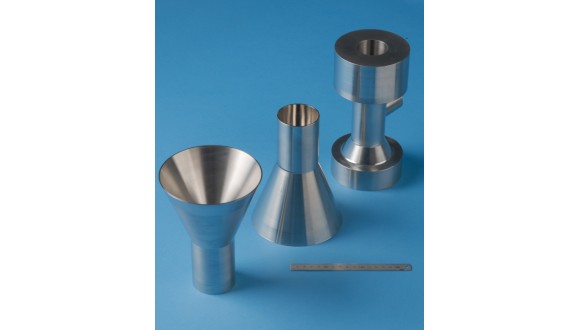
A wide range of manufacturing methods can be used to fabricate high-value engineering components, from traditional methods such as casting and forging to more recently-developed powder metallurgy (PM)-based processes such as near net-shape powder metallurgy hot isostatic pressing (NNS PM HIP), additive manufacturing (AM), spark plasma sintering (SPS), and metal injection moulding (MIM).
PM-based manufacturing methods represent a viable alternative to conventional processes, which can be limited by the presence of defects including porosity, elemental segregation and anisotropic microstructure and properties. Advanced PM manufacturing techniques not only avoid many of the drawbacks of conventional techniques, but also allow for increases in operating condition requirements, design complexity and a reduction in material wastage.
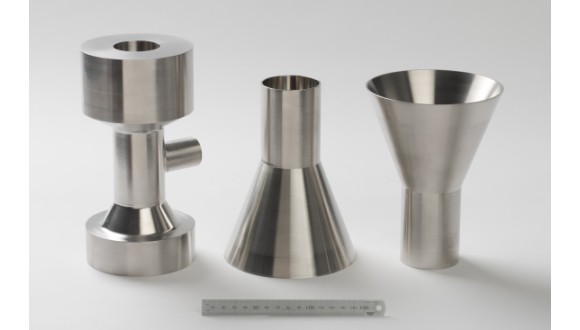
Among these advanced manufacturing methods, NNS PM HIP has been gaining interest for the efficient use of material, reduced number of welds, improved design flexibility, and near net-shape capability with excellent mechanical properties (comparable to, or better than, wrought material).
While this has seen NNS PM HIP adopted across various industrial sectors including, but not limited to, aerospace, space, defence, oil and gas, fusion, and nuclear, there remain challenges to the widespread adoption of the process.
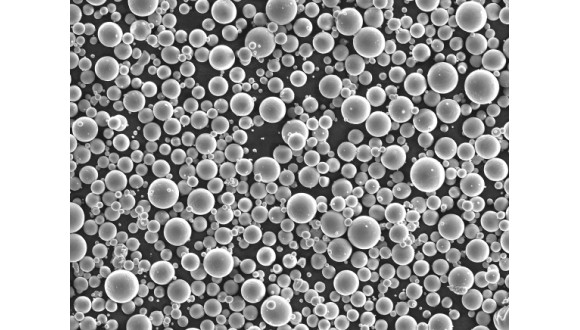
A particular challenge is the presence of several complex processing steps, such as canister design and manufacture, powder filling, outgassing and HIP densification, with each step having its own range of variables that impact the final microstructure, geometry and properties of ‘as-HIPed’ parts.
There is currently no single tool available to consider and evaluate these variables to allow users to accurately predict final part consolidation behaviour, which would reduce development time and costs for the manufacture of NNS PM HIP components and improve the ease of adoption for the process.
Project Objectives
This NNS PM HIP project was created to develop predictive analytics tools (including a finite element analysis (FEA) model) for the manufacture of NNS PM HIP components more efficiently and with a shorter lead time.
These digital tools are being developed to improve several aspects of NNS PM HIP part manufacture, including:
- Shortened development cycle and reduced overall risk associated with unknown variables through the digitalisation of PM HIP manufacturing process
- Improved process efficiency; reducing material wastage and energy consumption
- Ability to predict the geometry of ‘as-HIPed’ components with FEA modelling
- A predictive analytics tool to reduce the required number of HIP trials to achieve the desired shape/properties, speeding up the process and creating an additional reduction in material wastage
TWI Industrial Member Benefits
With increasing industrial interest in near net shape manufacturing as a replacement for conventional manufacturing processes, a number of our Industrial Members have expressed an interest in the outcomes.
As with all of our CRP projects, once complete, the outcomes of this work will be made available to our Industrial Members as a solution to tangible problems currently faced by industry, facilitating a standardised set of process parameters from which to initiate manufacturing of high value complex geometrical parts using NNS PM HIP technology.
The project outcomes are set to provide considerable value for the adoption of the NNS PM HIP process, as we progress from TRL (Technology Readiness Level)-3 to TRL-6.
Furthermore, the FEA and predictive analytical processes in this project can be transferrable to other advanced manufacturing processes, providing an additional benefit for Industrial Members, whether you are interested in NNS PM HIP or not.
We look forward to sharing more details around the outcomes of this project when it concludes towards the end of 2026.
You can find out more about powder metallurgy hot isostatic pressing (PM HIP) at TWI, here: https://www.twi-global.com/what-we-do/services-and-support/powder-metallurgy-hot-isostatic-pressing