Tue, 03 November, 2026
Today, 4 November, is National Engineering Day 2026, aimed at how engineering improves everyday lives and shapes the world around us.
TWI / The Welding Institute has been delivering engineering solutions for decades, often providing foundational advances and innovations upon which our Industrial Members and industry leans.
The day is designed to celebrate the creativity, innovation and impact of engineering while also inspiring the next generation to explore engineering careers.
To demonstrate some of the foundational work conducted over the years at TWI, we have collated some highlights stemming from the 1940s to the present day…
1940s
Plastic Design Theory: Plastic design theory enabled design loads in steel framed structures to be more accurately calculated, permitting the use of smaller sections for beams and columns, and resulting in more economical use of steel. The benefits of the method were evident and, within three years, more than 150 steel framed buildings had been designed and erected using the theory. This new approach was reflected in a significant change to the 1948 edition of the standard BS 449, ‘The Use of Structural Steel in Building.’ (Standards: BS 449)
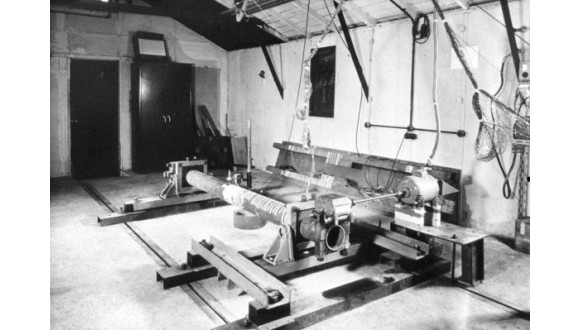
Resonance Fatigue Testing: First developed at the British Welding Research Association (a forerunner to today’s TWI) in the 1940s, resonance fatigue testing involves oscillating a component at a high frequency. The technique was advanced over the ensuing decades, with the original resonance test designs scaled up by the 1990s to allow larger pipe diameters to be tested under rotating bending conditions, at frequencies of about 30Hz. Data from later tests were incorporated into BS 7608 ‘Guide to Fatigue Design and Assessment of Steel Products,’ among other standards. (Standards: BS 7608)
1950s
Fatigue Design of Welded Steel Joints: The opening of a new fatigue testing laboratory in the 1950s allowed for full-scale fatigue tests on welded steel joints to be carried out at TWI, allowing the fatigue performance of different joint types to be plotted. This, in turn led to a greater understanding of residual stress on fatigue performance and how weld toe slag intrusions contributed to early crack growth. This work was instrumental in the development of fatigue design rules which were incorporated into numerous UK and international standards. (Standards: BS 5400, BS 7608)
1960s
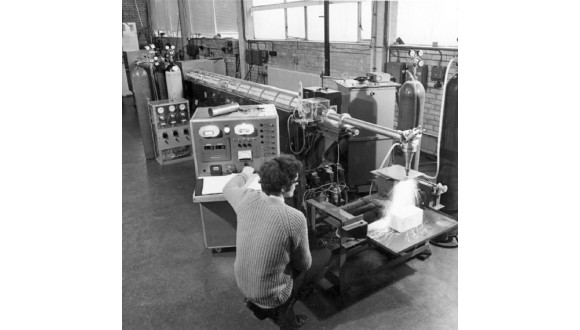
Oxygen-Assisted Laser Cutting: In 1967, TWI made history by combining the precision of a focused laser beam with the energy and chemistry of an oxygen gas jet to perform gas-assisted laser cutting. The experiment was conducted using a 300W pulsed, slow-flow carbon dioxide laser – the first of its kind constructed in the UK. The impact of this work was extraordinary, with the ensuing decades seeing the worldwide market for laser cutting machines increasing to be worth billions of dollars each year. The take-up of laser cutting by industry also led to the inclusion of laser cutting in the standard ISO 9013:2002 ‘Thermal Cutting—Classification of Thermal Cuts—Geometrical Product Specification and Quality Tolerances.’ (Standards: ISO 9013)
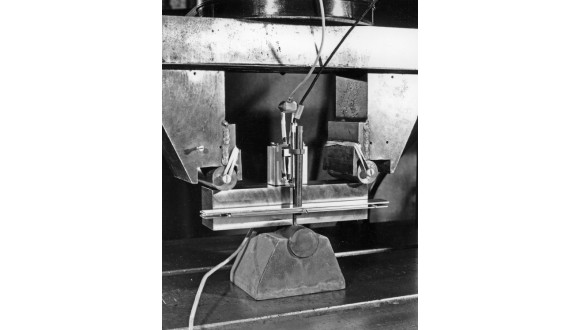
Crack Tip Opening Displacement: Crack tip opening displacement (CTOD) was developed through research carried out at TWI in the 1960s and became one of the most widely used fracture toughness measures within the oil and gas industry, playing a critical role in material and weld procedure selection and qualification, and in assessing the significance of weld defects. An ideal parameter for characterising the fracture toughness of medium-strength carbon manganese steels used in pressure vessels, offshore platforms and pipelines, CTOD testing to assess fracture toughness has been incorporated into many international standards. (Standards: BS 7448, ASTM E1290, ISO 12135, BS EN ISO 15653)
Fabrication Hydrogen Cracking: Research on the importance of controlling hydrogen during welding started in the 1940s, leading to the development of techniques for measuring hydrogen in weld metals and heat-affected zones. These initially involved hydrogen collection over substances in which it cannot dissolve, originally paraffin and later mercury. TWI developed the controlled thermal severity (CTS) test, which allowed the influence of various conditions (particularly steel composition, hydrogen level and preheat) on cracking to be explored cost-effectively. This would eventually lead to guidance included in a number of industry standards. (Standards: BS 5135, BS EN 1011)
1970s
Acicular Ferrite Weld Metal Microstructure of C-Mn Steel: By the mid-1970s, research had established that good toughness in C-Mn steel weld metal was associated with high levels of a microstructure known as ‘acicular ferrite.’ Researchers at TWI were the first to recognise that the desirable acicular ferrite microstructure was caused by nucleation on inclusions within the austenite grains, as well as on the grain boundaries. This prompted work to establish the correct type and distribution of inclusions within the grains. This was the first documented record of this idea, which is now commonly accepted. Subsequent development of strong, tough, C-Mn steel weld metals has been underpinned by this understanding.
Engineering Critical Assessment: In the 1970s, advances in fracture mechanics and an improved understanding of materials performance allowed engineers to establish acceptance levels for weld imperfections and their effect on structural integrity. This understanding allowed TWI to pioneer the engineering critical assessment (ECA) approach as a means of evaluating fitness for purpose, so engineers could make informed decisions about the significance of weld imperfections on service performance. This approach was refined and developed ever since and led to the creation of the standard BS 7910. (Standards: BS 7910)
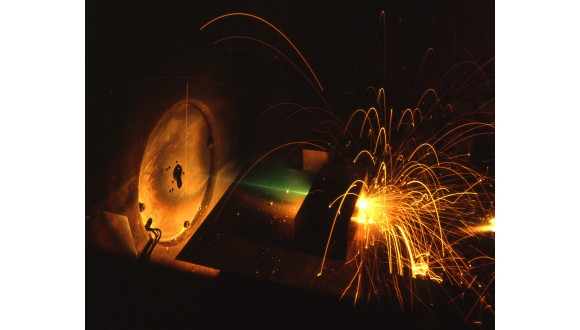
High-Power Electron Beam Welding: Originally invented in the 1970s, electron beam welding was developed further at TWI in the 1970s with the construction of an advanced, high vacuum, 75kW, 150kV machine capable of 300mm penetration in steel, 450mm in aluminium alloy and 125mm in copper alloy. This led to the creation of a licence agreement, under which some ten machines of this type were introduced into the Japanese fabrication sector of the power industry. Since then, TWI has continued to develop both electron gun and power source designs to meet the demands of industrial thick-section applications, including high-power (100kW) electron guns for deep-section welding of steel components such as steam turbines.
1980s
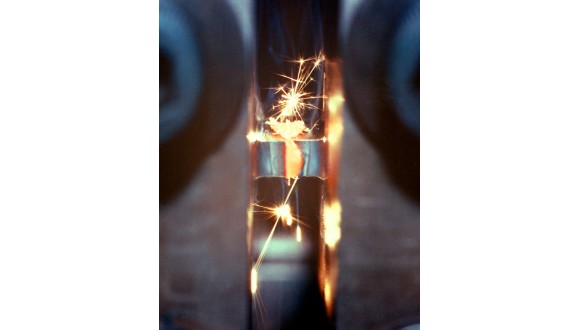
Linear Friction Welding: TWI pioneered linear friction welding (LFW) in the 1980s, beginning with the use of a modified rotary friction welding machine and later leading the manufacture of the world’s first LFW machine in 1987. Quick, consistent and easily reproducible, LFW is capable of joining dissimilar metals, and materials otherwise considered unweldable. TWI has continued to refine the process ever since, with applications being found for the process across industry.
Hydrogen Disbonding of Internally Clad Pressure Vessels: The 1980s saw the construction of TWI’s first high-pressure, high-temperature test facility, to investigate a series of incidents in which internal stainless-steel claddings in refinery equipment handling hot hydrogen gas had suffered disbonding – the separation of cladding from its base material. This prompted serious safety concerns, so TWI worked to identify the cause of the phenomenon and establish a solution using our bespoke high-pressure, high-temperature facility. Having identified the cause of the disbonding, we developed a two-stage, post-weld heat treatment procedure, which was demonstrated to significantly improve resistance to this form of cracking.
1990s
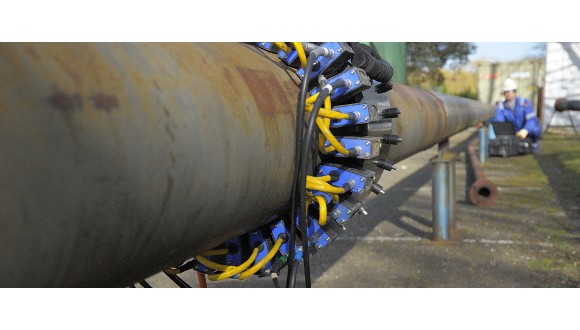
Long Range Ultrasonic Testing: The introduction of long-range ultrasonic testing by TWI in the early 1990s produced a solution for inspecting inaccessible pipes and pipelines. TWI was also the first company to commercialise the method, with applications including detection of corrosion under insulation, examination of pipe road crossings, large-scale rapid screening of pipework and the monitoring of structural tubular components.
Reduced-Pressure Electron Beam Welding: Although electron beam welding had proven successful for joining thick sections, there was a drawback since substantial components could only be welded with the use of a large vacuum chamber. To solve this and increase the viability of the process for industry, TWI tested the use of a small, locally sealed chamber to create the vacuum directly on the component. The performance was deemed satisfactory and led to the manufacture of a number of reduced-pressure electron beam machines, which addressed large-scale applications in the nuclear, oil and gas, and renewable energy industries in Europe and the USA, allowing for deep penetration, high productivity and low distortion.
Hardness Limits for Sour Service: Concerns over sulphide stress cracking in ferritic steels led to TWI investigating the validity of the maximum hardness limits recommended in many standards. It was found that these limits were overly conservative in some instances, such as with milder sour environments. This work was incorporated into new and updated industry standards. (Standards: ISI 15156, EFC 16)
2000s
Hydrogen-Induced Stress Cracking of Duplex Stainless Steel: Hydrogen-induced stress cracking (HISC) in duplex stainless-steel flowlines and forgings became a major problem for oil and gas companies in the 1990s and early 2000s, with several expensive failures leading TWI to develop test methods, gather materials data, and design procedures to overcome the problem. These studies raised awareness across industry and established critical stress data that enabled the creation of an industry standard for safe design against HISC, underpinning DNV Recommended Practice F112, ‘Design of Duplex Stainless Steel Subsea Equipment Exposed to Cathodic Protection’, which was published in 2008.
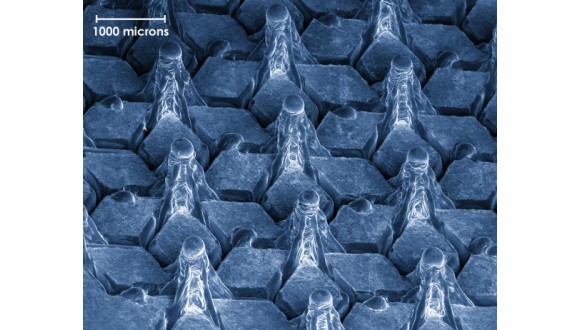
Electron Beam Surface Modification: After it was found that electron beams can be readily deflected at high speeds using electromagnetic coils, TWI conducted extensive research to explore the opportunities this presents; discovering that repeated small sweeps of the beam over a selection of positions on a surface allows deep textures to be made. This realisation led to the creation of a new process to produce features in the range of 10μm to 10mm at ~2cm2 per second, increasing surface area and greatly enhancing adhesion onto the surface. The unique surface features created by the process have been used commercially, to enhance the toughness of composite-to-metal joints for the aerospace industry and to improve the efficiency of heatsinks for electronics.
2010s
Adapting Ultrasonic Inspection to Austenitic Welds: Ultrasonic inspection of austenitic welds and cladding plays a crucial role in many industry sectors but is also extremely difficult as the large grain size causes the ultrasonic beam to skew and split, causing attenuation of the signal. TWI developed a methodology to improve the inspection of coarse-grained heterogeneous austenitic welds using three distinct cutting-edge technologies. The first step was to quantify the austenitic structure of the weld using electron backscatter diffraction (EBSD) before advanced modelling tools accurately simulated the propagation of a sound wave through the highly distortive medium of the weld microstructure. Finally, through the use of phased array ultrasonic technology and time-reversal principles, the new concept of ‘adapted delay laws’ was developed. This approach allowed TWI to create sound fields with less distortion at different regions of the weld, greatly improving the signal-to-noise ratio and resolution of the inspection, and allowing much more accurate detection and sizing of defects.
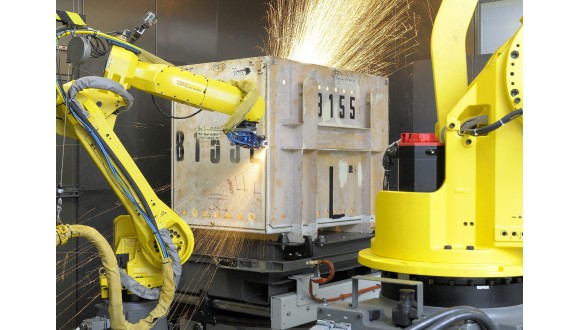
Laser Cutting for Nuclear Decommissioning: Having demonstrated the use of remotely manipulated lasers for cutting tubes and thick section plates, TWI was the first organisation in the UK to apply laser cutting to decommissioning radioactive materials, cutting several waste containers, previously used to store fuel assemblies from Magnox reactors, into five parts. Once separated, the surfaces were milled to remove the radioactive layer. TWI’s ground-breaking work in this area was recognised with a Nuclear Decommissioning Authority innovation award in 2015.
2020s
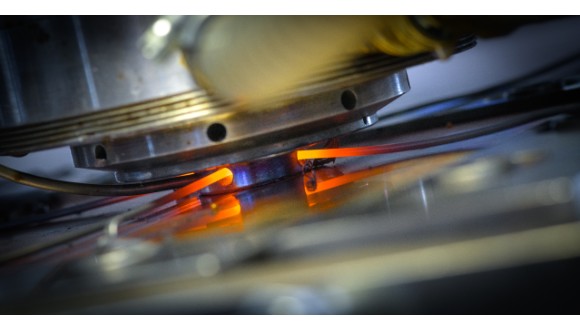
CoreFlow® Sub-Surface Machining Process: As a development of friction stir welding (itself invented at TWI), CoreFlow® is a solid-state process that combines FSW knowledge with friction stir channelling (FSC) to allow for sub-surface networks of channels to be integrated into two- or three-dimensional monolithic parts in a single manufacturing step. This highly disruptive, sub-surface machining technique opened up a range of potential applications across industry, including for the manufacture of heat exchangers, cooling systems, integrated fluid management, hydraulic lubrication networks, aerospace anti-icing systems, embedding instrumentation in metallic surfaces, cable management, cooling systems for data servers, the general lightweighting of structures, and more. CoreFlow® also created an additional application for the extrusion of wire, which was a by-product of the original sub-surface channelling that was envisaged.
Making the Next Generation of RTR Joints a Reality: The high chemical resistance, extended lifespan and reduced need for maintenance or inspection, reinforced thermoset resin (RTR) pipe promised an alternative to metallic pipes for the transportation of a range of fluids. However, their use was restricted by the difficulty in joining them, which relied on highly skill-dependent joining solutions in challenging environments, such as adhesive bonding or threaded connections. To address this issue, the Non-metallic Innovation Centre (NIC), of which TWI is a partner, developed an innovative joining process, W-RTR, which combines induction welding (IW) and rotary friction welding (RFW). Although induction welding was an established technique, this innovation adapted the metal-based RFW process to join non-metallic materials, pushing the boundaries of welding technology to join thermoplastic to thermoset composite for the first time without any modification to either of the materials.
Strain-Based Quantification of Environmentally Assisted Cracking: Severe operating environments, coupled with the presence of high loads and susceptible microstructures was known to lead to environmentally assisted cracking (EAC). The prevention of cracking had traditionally been managed using fracture mechanics-based approaches, but whilst such approaches are useful for predicting whether a pre-existing flaw is unacceptable, they do not always successfully predict whether a crack initiated in the absence of a defect. To address this, TWI developed strain-based approaches for the quantification of EAC thresholds, focusing on plastic strain as the driver for crack initiation. These methodologies integrated numerical modelling of geometric features, calculation of in-service strain levels, and representative environmental testing to quantify strain thresholds for cracking, recognising the close interplay between these variables.
These are just some examples of the foundational work conducted at TWI over the decades upon which future advances, standards and more were built. Research and innovation continues to this day at TWI through a variety of projects for the direct benefit of our Industrial Members and industry in general.
We are proud of our many achievements across all industry sectors and how, in line with National Engineering Day 2026, these breakthroughs have improved everyday lives and shaped the world around us.