Tue, 27 January, 2026
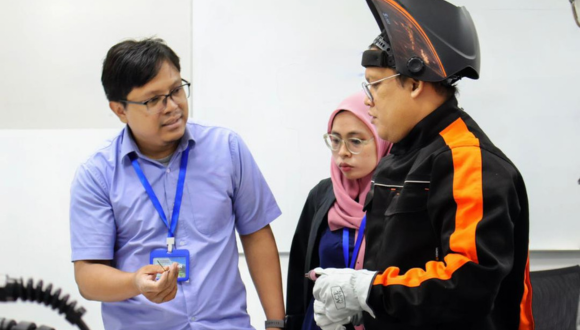
TWI Technology (S.E.Asia) Sdn Bhd recently delivered a specialised training and evaluation programme designed to assess welder performance through a hybrid welding approach, combining conventional welding techniques with Augmented Reality (AR) TIG welding technology.
The primary purpose of this programme was to evaluate welder capability, consistency, and process control against demanding stainless steel and aerospace-quality requirements, while introducing advanced training tools that closely replicate real industrial conditions.
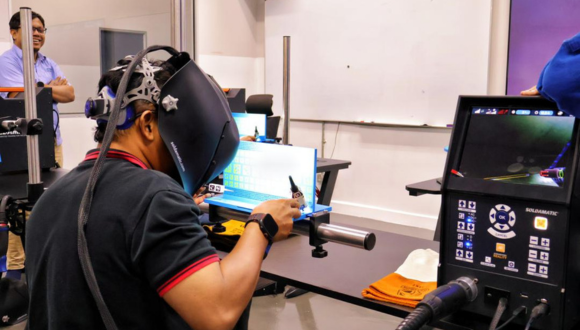
Hybrid Approach for Enhanced Skill Assessment
The programme adopted a hybrid methodology that integrates traditional welding practices with AR TIG welding systems. This approach enabled participants to demonstrate hands-on welding skills using conventional methods, while also leveraging digital and augmented tools to refine precision, control, and technique.
By combining both methods, the evaluation provided a comprehensive view of welder performance bridging practical craftsmanship with modern training technology aligned to high-specification industries.
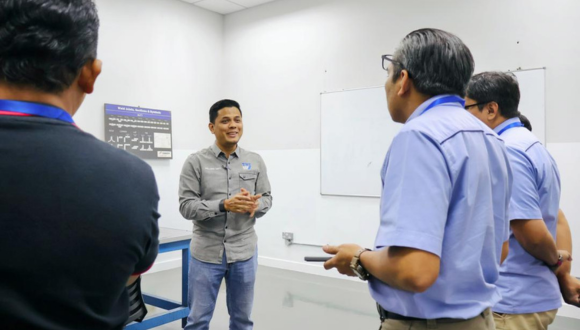
Data-Driven and Observation-Based Evaluation
Welder performance was assessed using a balanced framework of qualitative observations and quantitative data analysis. This included real-time feedback on technique, posture, torch control, and heat input, alongside measurable performance data captured through the AR welding system.
This dual evaluation model delivered clear insights into:
- Individual skill levels
- Welding consistency and repeatability
- Process discipline and control under simulated industrial conditions
The structured assessment allowed for objective benchmarking while also supporting targeted skill improvement.
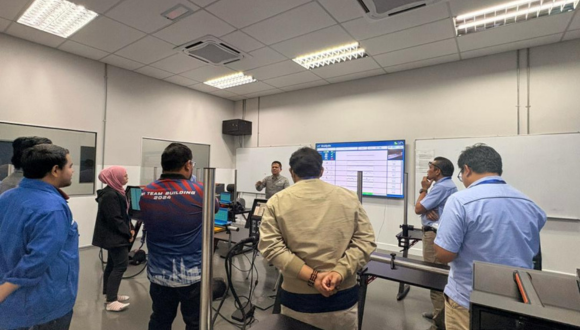
Advancing Training with Real Industrial Impact
This programme serves as a strong example of how advanced training technologies, when combined with proven conventional methods, can significantly enhance learning outcomes and industrial readiness. The use of AR TIG welding not only improves training efficiency but also supports safer, more controlled skill development particularly for high-integrity applications such as stainless steel and aerospace welding.
Through initiatives like this, TWI Southeast Asia continues to demonstrate its commitment to delivering innovative, industry-relevant training solutions that translate directly into improved performance, quality, and productivity in real-world applications.